
A Tribute to Baroness Audrey Emerton of Tunbridge Wells and Clerkenwell DBE
Published by Debbie Baverstock on Mon, 02/03/2026 - 08:40
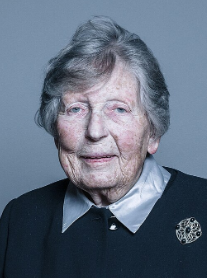
Her leadership came into sharpest focus during her years as Chief Nursing Officer for the South East Thames Regional Health Authority in the 1980s, when she guided the closure and replacement of Darenth Park Hospital in 1988, then a vast institution for people with learning disabilities. Her leadership at Darenth Park remains one of the most humane acts of system change in modern British healthcare. She led that transition with compassion and courage, proving that dignity must never be optional.
Across her wider public life, she strengthened institutions by strengthening the people within them. In Brighton, she chaired the Brighton Health Care NHS Trust from 1994 to 2000, helping shape a culture of professionalism and learning. The Audrey Emerton Building — an educational centre of Brighton and Sussex University Hospitals NHS Trust — stands as a testament to her influence. At the Nursing and Midwifery Council, she championed standards that protect the public and elevate the profession.
She was appointed Dame Commander of the Order of the British Empire in 1989 and created a life peer in 1997, sitting in the House of Lords until her retirement in 2019, where her voice was calm, principled, and grounded in lived experience.
Her contribution to the voluntary and charitable world carried a particular warmth. As President of the Florence Nightingale Foundation, she invested in future leaders with the same generosity that defined her own career. At St John, she rose from cadet to chief commander, shaping an organisation that millions rely on in moments of need. And at Attend, she guided the charity through a profound transformation as chair from 2003 to 2006 — overseeing a new name, a new constitution, and a renewed purpose. She stood beside hundreds of Friends groups, steadying them, reassuring them, honouring their contribution. She understood that volunteers are not the margins of public life; they are its lifeblood. After stepping down as chair, she continued to serve as vice president.
What she offered — to colleagues, to communities, to the country — was a model of leadership that does not shout but endures. A leadership that does not seek credit but creates possibility. A leadership that reminds us that service, done well, is its own legacy.
Baroness Emerton’s life is a testament to what one person can achieve when they choose to serve with integrity, courage, and compassion. And it is an invitation — to all who work in public and community life — to carry that spirit forward.
To lead with humanity
To act with purpose.
To leave things better than we found them.
Her contribution deserves to be remembered. More than that — it deserves to be continued.
Baroness Audrey Emerton of Tunbridge Wells and Clerkenwell DBE
Born: 10 September 1935
Died: 27 February 2026 (age 90 years)
The Observer also paid tribute to Baroness Emerton and the obituary can be read here https://observer.co.uk/news/columnists/article/obituary-audrey-emerton-nursing-leader-and-crossbench-peer
Photo: Chris McAndrew, CC BY 3.0 <https://creativecommons.org/licenses/by/3.0>, via Wikimedia Commons
Organisations, Roles & Achievements
South East Thames Regional Health Authority
Chief Nursing Officer (Throughout the 1980s)
Led the closure of Darenth Park Hospital (1988), a landmark in ending institutional care for people with learning disabilities; modelled compassionate, community-based transition.
Brighton Health Authority / Brighton Hospitals
Chair
Guided acute and community services through modernisation; strengthened patient experience, nursing leadership, and community engagement.
Nursing and Midwifery Council (NMC)
Chair
Oversaw early regulatory reform; strengthened professional standards, public protection, and the national voice of nursing and midwifery.
Royal College of Nursing (RCN)
Fellow (FRCN)
Influenced leadership development, education, and professional standards; championed the role of nurses in shaping national policy.
Florence Nightingale Foundation
President
Elevated the Foundation’s national profile; championed leadership scholarships, research, and professional development for nurses and midwives.
St John Ambulance / Order of St John
Chief Commander; GCStJ
Lifelong service from cadet to senior leadership; strengthened volunteer mobilisation, first aid training, and public health emergency response.
Defence Medical Welfare Services
Champion and Board Member
Support the Board to appoint the leadership team.
Attend (formerly National Association of Hospital & Community Friends)
Chair of the Board (2003-2006) and Vice President (2006-2026)
Oversaw name and constitutional change; reassured and united hundreds of local Friends groups; protected their voice and strengthened the charity’s national identity and purpose.
House of Lords
Crossbench Peer (1997–2019)
Brought clarity, compassion, and practical insight to debates on health, care, regulation, patient dignity, and the voluntary sector.